Key Takeaways
A portable (mobile) EV charger is a plug-in cordset you can unplug and take with you; a wall-mounted charger is a fixed unit installed by your parking spot, usually hardwired or on a dedicated outlet.
Portable units are capped lower on power: Tesla's Mobile Connector tops out at 32 amps, while its hardwired Wall Connector delivers up to 48 amps.
For Level 2 (240-volt) speed, a portable charger still needs a dedicated 240-volt outlet installed, so you pay an electrician either way.
A fixed unit removes the plug-and-receptacle connection, which is the part most likely to loosen or overheat under daily high-amp charging.
A portable charger is the better fit for renters, condo dwellers, and anyone likely to move, because it leaves with you.
Many older Saddleback Valley homes on 100- or 125-amp panels need a capacity check first, while newer Baker Ranch and Foothill Ranch homes on 200-amp service usually have room.
What Is the Real Difference Between a Portable and a Wall-Mounted Charger?
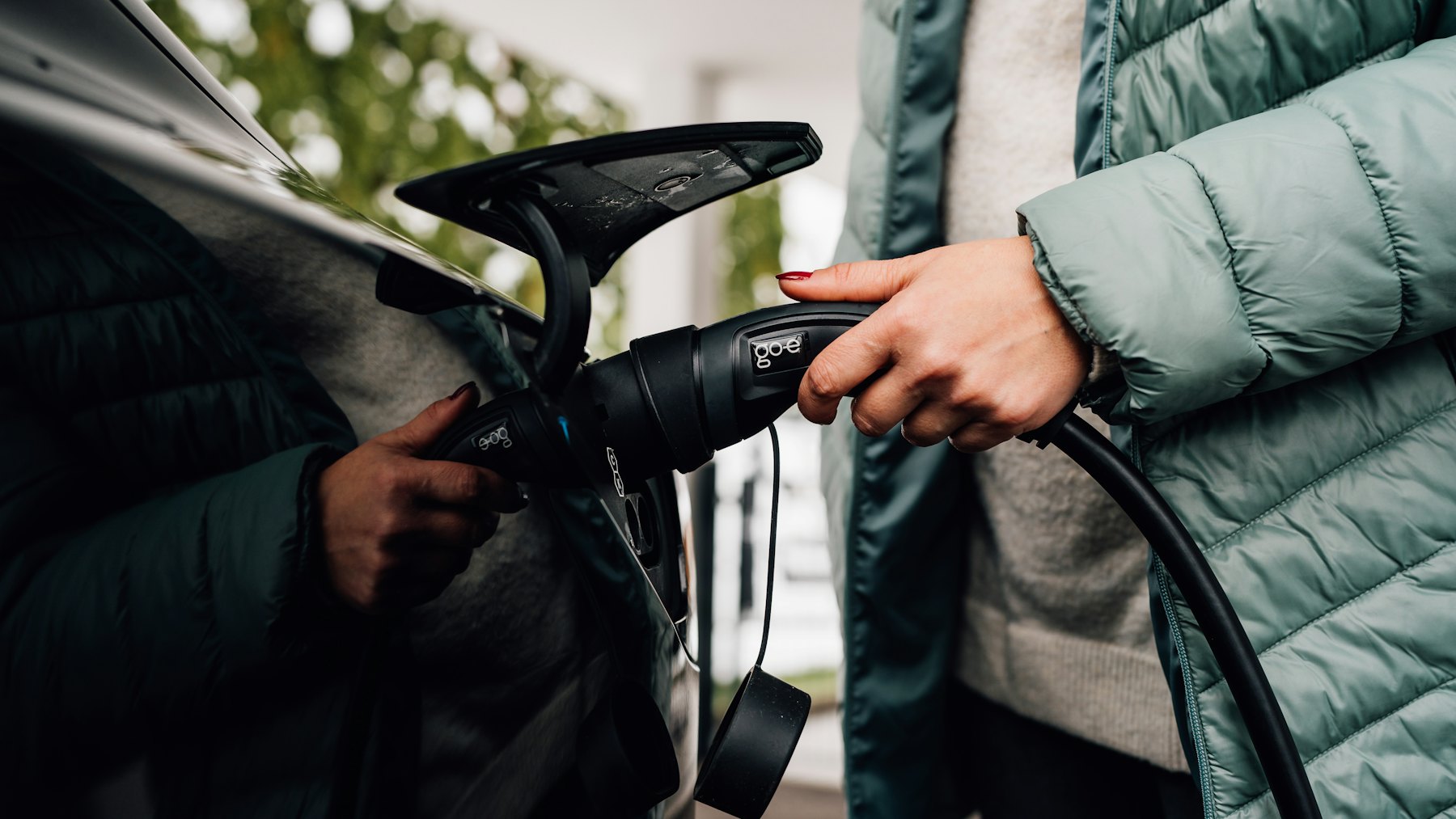
A portable EV charger is a plug-in cordset you connect to an outlet and can unplug and carry, while a wall-mounted charger is a permanently installed unit fixed beside your parking space. The portable version is the same category of device as the Level 1 cordset most EVs ship with; the U.S. Department of Energy's Alternative Fuels Data Center notes that owners can simply opt for the Level 1 cordset provided with the vehicle and plug into an existing outlet. A 240-volt portable unit, such as Tesla's Mobile Connector, works the same way but at Level 2 speed.
A wall-mounted charger, by contrast, is meant to live in one place. It is screwed to the garage or exterior wall, wired to its own circuit, and treated as a fixture of the house. Tesla itself draws the line clearly, recommending its fixed Wall Connector for charging at home while presenting the Mobile Connector as the option for travel and extended trips. The hardware overlaps, but the intent behind each unit is different.
How Much Charging Speed Do You Give Up With a Portable Unit?
You give up meaningful speed with most portable units because they are limited to a lower amperage than a hardwired wall charger. Tesla's Mobile Connector lists a maximum 32 amp output even on a 50-amp NEMA 14-50 outlet, which works out to roughly 30 miles of range per hour. The hardwired Wall Connector can provide up to 11.5 kW and 48 amp output, or up to about 44 miles of range per hour on a Model 3 or Model Y.
The gap is partly electrical code, not marketing. A charger that plugs into an outlet is a cord-and-plug load, and a continuous load has to be limited to 80 percent of the circuit rating, so a plug-in unit on a 50-amp outlet tops out near 40 amps regardless of the car. Hardwiring removes the plug and lets a unit run at a higher continuous current. For a daily driver with a long south-county commute, that difference can be the margin between a full battery by morning and not quite.
Which Option Is Safer and Easier to Keep Running?
A hardwired wall-mounted charger is generally the lower-risk choice for daily charging because it eliminates the plug-and-receptacle connection, which is the part of a plug-in setup most likely to loosen, corrode, or overheat over years of high-amp use. A NEMA 14-50 outlet feeding a portable unit carries 30 to 40 amps for hours at a stretch, and a receptacle that is not rated for that duty cycle is a known failure point. Removing the plug removes that weak link.
Equipment quality matters as much as the connection. ENERGY STAR warns that not all EV chargers that are for sale are safety certified, including some from large online and storefront retailers, a caution that applies especially to the inexpensive portable cords sold on marketplace sites. Whichever type you choose, an outdoor install needs weather-rated equipment; the AFDC notes plainly that outdoor installations require outdoor-rated equipment, which matters for a charger mounted on an exterior wall or a cord run to a driveway.
Do You Still Need a Permit and an Outlet?
Yes. A portable charger does not let you skip the electrical work if you want Level 2 speed. Running a 240-volt circuit and installing a NEMA 14-50 outlet is a permitted job in Lake Forest whether the charger that plugs into it is portable or not, and the AFDC points out that a qualified electrician can add circuits to accommodate the capacity needed for Level 2 charging. The convenience of a portable unit still rests on a professionally installed outlet. Our guide to EV charger permit requirements covers what that process involves.
When Does a Portable Charger Actually Make More Sense?
A portable charger makes the most sense when you are not certain the charger will stay with the house, which covers more Lake Forest drivers than you might expect. If you rent, live in a condo, or expect to move within a few years, a plug-in unit comes off the wall and leaves with you, taking its value along. A fixed wall unit, by contrast, becomes part of the property you leave behind.
Not sure which charger your Lake Forest panel can handle?
A quick load check tells you whether your service has room for a fast hardwired unit or a lower-amp portable setup before you buy either one. The answer is free.
Talk to an installerPortability also helps if you charge in more than one place, or want a backup for road trips. The same cordset that tops up the car at home can go in the trunk for a relative's house or a vacation rental. For a single-car household in an apartment near the Lake Forest Sports Park, that flexibility can outweigh the speed a hardwired unit would add. The trade-off is that you are plugging and unplugging a heavy connector every day, and relying on a receptacle rather than a sealed connection.
What Do Older Lake Forest Panels Mean for Your Decision?
Your electrical panel often decides the question before preference does, because both options draw from the same 240-volt circuit and that circuit has to fit your service. A large share of Saddleback Valley homes built in the 1970s and 80s still run on 100- or 125-amp panels that are already carrying air conditioning, an electric range, and sometimes a pool pump, leaving little headroom for a 40- to 48-amp charging circuit. Newer neighborhoods such as Baker Ranch and Foothill Ranch typically ship with 200-amp service and more room to work with.
This is where the portable-versus-fixed question narrows. If your panel is tight, you may be limited to a lower-amp circuit that a portable unit can use just as well as a wall-mounted one, which can make the cheaper portable route sensible. If you have 200-amp service and a daily driver, the headroom to hardwire a 48-amp Wall Connector is there, and the faster, sealed install is usually worth it. Southern California Edison, the utility here, bills the same off-peak overnight power either way, so the device choice does not change your rate. A panel capacity check tells you which path your home can support.
How Should You Decide Between the Two?
Choose based on permanence and panel headroom, in that order. If you own a Lake Forest home with 200-amp service and park in the same spot every night, a hardwired wall-mounted charger is the better long-term install: faster, tidier, and more durable. If you rent, expect to move, have a constrained older panel, or want one charger that travels, a portable unit on a properly installed 240-volt outlet is the flexible, lower-commitment choice. Either way the dedicated circuit and outlet are the part worth getting right, and that is what a Level 2 EV charger installation or a hardwired EV charger installation from Lake Forest EV Charger is built on.
Frequently Asked Questions
Can I use a portable EV charger as my only home charger?
Yes. Many Lake Forest drivers use a 240-volt portable charger as their everyday home unit with no issue, as long as it is plugged into a properly installed, dedicated outlet rather than an extension cord or shared circuit. The main trade-offs are a lower top speed and reliance on a plug connection that sees daily use.
Is a portable charger slower than a wall charger?
Usually, yes. Portable units are commonly capped around 32 amps, while hardwired wall units run up to 48 amps or more. On a typical EV that is roughly 30 versus 44 miles of range added per hour. For overnight charging the slower rate is often still plenty; for a driver who gets home late on empty, the faster hardwired unit can matter.
Do I need an electrician for a portable EV charger?
For Level 2 (240-volt) charging, yes. A portable charger still needs a dedicated 240-volt outlet, such as a NEMA 14-50, and installing one is permitted electrical work in Lake Forest. You can plug a Level 1 portable cord into an existing standard outlet without new wiring, but that only adds a few miles of range per hour.
Which is better for a rental or condo in Lake Forest?
A portable charger is usually the better fit for a rental or condo, because it is not a permanent fixture and comes with you when you move. Confirm with your landlord or HOA before installing any 240-volt outlet, and keep the install permitted so it stays safe and insurable.